Ear Infections in Dogs & Cats

Causes, Symptoms, and How to Safely Clean Your Pet’s Ears
Ear infections are a common reason dogs and cats visit us here at Hamilton Animal Hospital in Huntington Beach. While they’re extremely treatable, ear infections (also called otitis) can be painful and frustrating for pets. They can also point to deeper underlying issues like allergies, parasites, or trapped debris.
In the videos below, Dr. Alkofer explains the most common causes of ear infections, the signs every pet parent should watch for, and how to safely clean your dog’s ears at home.
What Causes Ear Infections in Pets?
Dogs tend to develop ear infections more often than cats, and in many cases, allergies are the root cause. According to Dr. Alkofer, the most common triggers include:
Environmental allergies (pollen, dust, mold)
Food allergies
Yeast or bacterial overgrowth
Foreign bodies stuck in the ear canal (like foxtails)
Excess moisture from baths or swimming
Cats also develop ear infections, though the causes are slightly different. In addition to allergies, they commonly face issues related to:
Ear mites
Polyps
Yeast or bacterial infections
Debris lodged in the ear canal
Understanding the “why” behind your pet’s infection is key to preventing flare-ups and keeping them comfortable long-term.
How to Tell if Your Pet Has an Ear Infection
Pets often give early warning signs when something is wrong with their ears. If you notice any of these symptoms, it’s time for a vet visit:
Head shaking
Scratching at the ears
Redness or swelling
Discharge or debris
Bad odor coming from the ears
Sensitivity when the ears are touched
Even a mild infection can progress quickly, so prompt care helps prevent complications and discomfort.
How Veterinarians Diagnose Ear Infections
At Hamilton Animal Hospital, our doctors will perform an ear cytology: a quick, painless test that gives us immediate answers.
Here’s how it works:
We collect a small sample of the wax or debris in your pet’s ear canal.
The sample is stained and examined under a microscope.
We identify whether yeast, bacteria, inflammatory cells, mites, or other issues are present.
This allows us to choose the specific medication your pet needs, whether that’s a topical ear treatment, an oral medication, or a combination of both.
Cytology also allows us to track progress. At recheck appointments, your pet’s follow-up cytology helps confirm that the infection is truly resolving — so we never have to guess.
Should You Clean Your Pet’s Ears?
Dogs without allergies usually don’t need regular ear cleanings.
Over-cleaning can irritate the ear canal and actually cause inflammation in some dogs.
However, dogs who are prone to infections — especially allergy-sensitive breeds — often benefit from routine ear maintenance, such as:
Weekly or twice-weekly gentle flushes
Using a veterinary-approved ear cleaner like EpiOtic
Avoiding cotton swabs (Q-tips), which can push debris deeper into the ear
If your pet has recurrent infections, there is usually an underlying cause. Allergies, mites, foreign material, or anatomical issues may all contribute. Our veterinary team can help get to the bottom of it.
How to Safely Clean Your Dog’s Ears at Home (Step-by-Step)
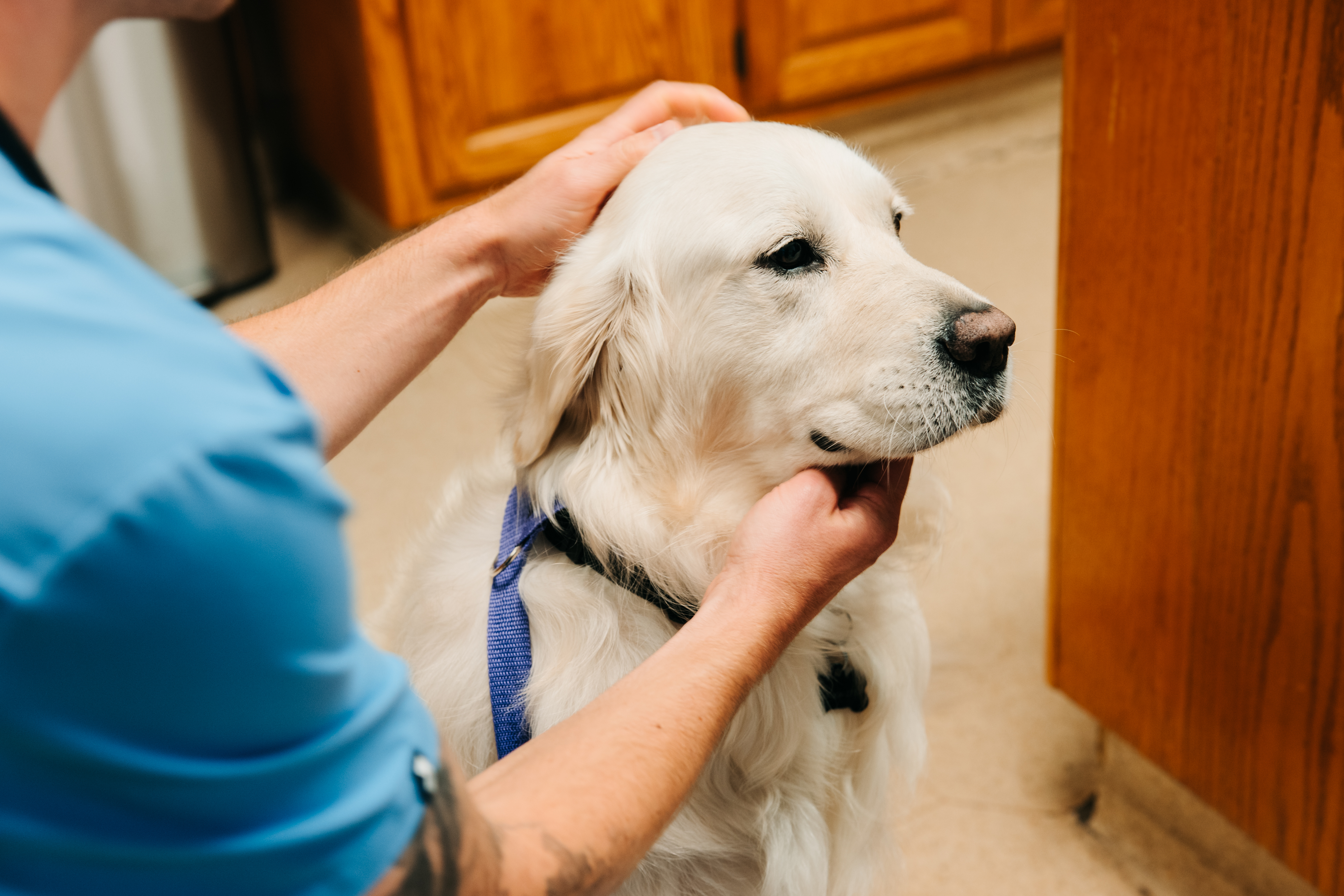
In the video below, Dr. Alkofer demonstrates a safe technique for cleaning your dog’s ears using products you likely already have at home.
Here are key takeaways from his demonstration:
✔️ What You’ll Need
A gentle ear cleaner (like EpiOtic)
Cotton balls, gauze, or makeup pads
High-value treats for distraction
A calm, patient approach
✔️ The Right Cleaning Technique
Apply ear cleaner to your cotton pad or gauze.
Gently place your finger (wrapped in gauze or a cotton ball) into the ear canal.
Your finger can only reach the vertical canal, so you will NOT contact the eardrum.
Let your finger naturally “come to rest” — don’t push or force it.
Move in gentle circular motions to loosen and absorb wax.
Repeat until the cotton comes back mostly clean.
Use treats generously — cleaning can feel strange for pets, and a little encouragement goes a long way!
When to Call Your Veterinarian
You should schedule an exam if:
Your pet seems uncomfortable during cleaning
You notice persistent odor or discharge
Symptoms return shortly after treatment
Your pet has chronic allergies
Your pet shakes their head after outdoor hikes (possible foxtails)
If your pet’s ears “just keep being a problem,” let our team help determine what the underlying issue is.
Ear Infections Are Treatable. We’re Here to Help.
At Hamilton Animal Hospital, we’re committed to helping pets in Huntington Beach and the surrounding areas live happy, healthy lives. Whether your pet is showing signs of an ear infection or you’re noticing recurring issues, early care makes all the difference.
We are currently accepting new patients!
Call us today to speak with our friendly team or schedule an appointment online to get your pet the relief they deserve.
Your pet’s comfort is our priority — and we’re here to help every step of the way.